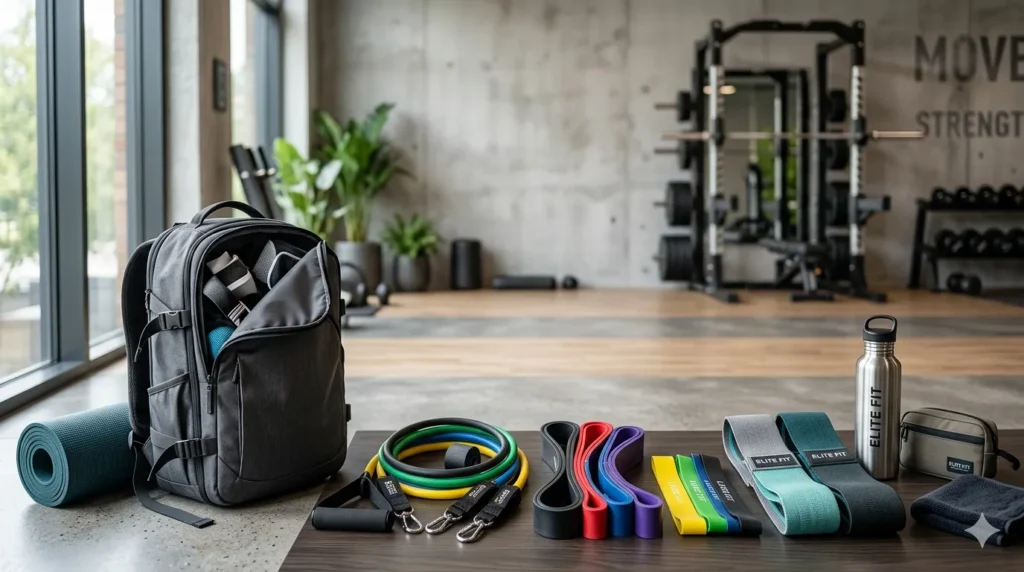
Portable resistance bands have become one of the easiest ways to stay fit anywhere — whether you are training at home, in a hotel room, at the gym, or outdoors. They are lightweight, affordable, and surprisingly effective for strength training, mobility work, muscle activation, and rehabilitation.
Unlike bulky gym equipment, portable resistance bands fit inside a backpack while still allowing you to train almost every muscle group. That makes them ideal for travelers, beginners, busy professionals, and even experienced athletes looking for versatile workout tools.
In this guide, you’ll learn:
- What portable resistance bands are
- The different types available
- Their benefits for gym and travel workouts
- How to choose the right band
- Best exercises for beginners
- Common mistakes to avoid
- FAQs people search on Google
What Are Portable Resistance Bands?
Portable resistance bands are lightweight elastic fitness bands designed for strength training, mobility, stretching, rehabilitation, and muscle activation. They are easy to carry, require minimal space, and can replace or supplement gym equipment during home or travel workouts.
Why Portable Resistance Bands Are So Popular
Resistance bands have gained popularity because they solve a major problem: consistency.
Many people struggle to maintain workouts while traveling or during busy schedules. Bands make it easier to train anywhere without depending on a full gym setup.
Key Benefits of Portable Resistance Bands
- Lightweight and easy to carry
- Suitable for home, gym, and travel
- Beginner-friendly
- Low-impact on joints
- Affordable compared to gym machines
- Versatile for full-body workouts
- Helpful for warm-ups and recovery
- Excellent for progressive resistance training
Additionally, bands create constant tension throughout exercises, which can improve muscle engagement.
Types of Resistance Bands
Different resistance bands serve different fitness goals. Choosing the right type improves both comfort and workout effectiveness.
Tubes With Handles
These bands are usually made of latex or natural rubber and feature handles on both ends.
Best For
- Full-body workouts
- Home gym setups
- Travel workouts
- Beginners
Advantages
- Easy to grip
- Compatible with door anchors
- Great for pushing and pulling movements
Common Exercises
- Chest press
- Rows
- Shoulder press
- Bicep curls
Superbands
Superbands are large continuous-loop bands commonly used for assisted pull-ups and advanced resistance training.
Best For
- Strength training
- Assisted pull-ups
- Mobility work
- Athletic training
Advantages
- High resistance levels
- Durable
- Useful for compound exercises
Common Exercises
- Assisted pull-ups
- Deadlift assistance
- Squats
- Stretching routines
Mini-Bands
Mini-bands are small loop bands designed for lower-body activation and rehabilitation exercises.
Best For
- Glute activation
- Leg workouts
- Rehab exercises
- Warm-ups
Advantages
- Compact size
- Beginner-friendly
- Excellent for lower-body training
Common Exercises
- Glute bridges
- Lateral walks
- Squats
- Clamshells
Fabric Bands
Fabric bands are softer against the skin and generally more comfortable during lower-body workouts.
Best For
- Glute training
- Home workouts
- Beginners
- Sensitive skin
Advantages
- Comfortable material
- Less rolling during workouts
- Minimal latex smell
Common Exercises
- Hip thrusts
- Squats
- Side steps
- Donkey kicks
Comparison Table: Which Resistance Band Is Best?
| Band Type | Best Use | Portability | Resistance Level | Beginner Friendly |
|---|---|---|---|---|
| Tubes With Handles | Full-body workouts | Excellent | Medium to High | Yes |
| Superbands | Strength training | Good | High | Moderate |
| Mini-Bands | Lower-body activation | Excellent | Light to Medium | Yes |
| Fabric Bands | Glute workouts | Excellent | Medium | Yes |
Are Resistance Bands Effective for Building Muscle?
Yes, resistance bands can help build muscle when used with proper intensity, progressive overload, and consistent training. They create continuous tension during exercises, which activates muscles effectively for strength and hypertrophy.
Gym vs Travel: How Resistance Bands Fit Both
Using Resistance Bands in the Gym
Bands are not only for beginners. Many experienced lifters use them to:
- Add variable resistance
- Improve mobility
- Warm up muscles
- Increase exercise difficulty
- Enhance mind-muscle connection
For example, adding bands to squats or push-ups increases tension throughout the movement.
Using Resistance Bands While Traveling
Travel workouts often fail because people lack equipment.
Portable resistance bands solve this issue because they:
- Fit into luggage easily
- Require minimal setup
- Work in small spaces
- Allow quick hotel workouts
Even a 20-minute resistance band routine can help maintain consistency during trips.
Best Portable Resistance Band Exercises for Beginners
Full-Body Beginner Routine
| Exercise | Target Muscle | Recommended Band |
|---|---|---|
| Squats | Legs & Glutes | Superband or Fabric Band |
| Bicep Curls | Arms | Tube Bands |
| Shoulder Press | Shoulders | Tube Bands |
| Glute Bridges | Glutes | Mini-Bands |
| Rows | Back | Tube Bands |
| Assisted Pull-Ups | Upper Body | Superbands |
How to Choose the Right Portable Resistance Bands
What Should You Look for in Resistance Bands?
When choosing portable resistance bands, look for resistance level, durability, material quality, portability, comfort, and exercise compatibility. Beginners usually benefit from light-to-medium resistance sets with multiple band options.
Important Buying Factors
Resistance Levels
Most sets include light, medium, and heavy bands. Beginners should start lighter and progress gradually.
Material Quality
High-quality latex or durable fabric lasts longer and provides safer resistance.
Portability
Travel users should prioritize compact bands with carrying bags.
Accessories
Useful extras include:
- Door anchors
- Handles
- Ankle straps
- Storage pouch
Comfort
Fabric bands are generally more comfortable for lower-body exercises.
Common Mistakes to Avoid
Using Too Much Resistance Too Soon
Many beginners choose heavy bands immediately, which affects form and increases injury risk.
Ignoring Proper Anchoring
Poor anchoring can snap bands back dangerously. Always secure them correctly.
Neglecting Progressive Overload
Bands work best when resistance gradually increases over time.
Using Damaged Bands
Check for tears, cracks, or thinning before workouts.
Resistance Bands vs Dumbbells
| Feature | Resistance Bands | Dumbbells |
|---|---|---|
| Portability | Excellent | Poor |
| Storage Space | Minimal | High |
| Travel Friendly | Yes | No |
| Joint Impact | Lower | Moderate |
| Progressive Resistance | Moderate | Excellent |
| Cost | Affordable | Expensive |
Who Should Use Portable Resistance Bands?
Portable resistance bands are suitable for:
- Beginners
- Frequent travelers
- Home workout enthusiasts
- Athletes
- Seniors
- Rehabilitation users
- Busy professionals
They are especially useful for people who struggle to maintain workout consistency.
Can You Get a Full-Body Workout With Resistance Bands?
Yes, portable resistance bands can train the entire body, including chest, back, shoulders, arms, core, glutes, and legs. Different band styles allow pushing, pulling, squatting, and mobility exercises without traditional gym equipment.
Tips for Better Results With Resistance Bands
- Train consistently
- Focus on controlled movements
- Increase resistance gradually
- Combine bands with bodyweight exercises
- Track progress weekly
- Prioritize proper form
Consistency matters more than equipment complexity.
Frequently Asked Questions
Are portable resistance bands good for beginners?
Yes. They are beginner-friendly because they offer adjustable resistance and low-impact training.
Can resistance bands replace gym equipment?
For many users, yes. Bands can effectively support strength training, mobility work, and muscle endurance exercises.
Which resistance band is best for travel?
Tube bands and mini-bands are typically the most travel-friendly due to their compact design.
Are fabric bands better than latex bands?
Fabric bands are usually more comfortable and less likely to roll, while latex bands offer greater versatility.
How long do resistance bands last?
High-quality bands can last several years with proper care and storage.
Can resistance bands help with weight loss?
Yes. Resistance band workouts burn calories, build muscle, and improve overall activity levels.
Final Thoughts
Portable resistance bands are one of the simplest yet most effective fitness tools available today. Whether your goal is strength training, mobility, muscle activation, or staying fit while traveling, they provide flexibility without the bulk of traditional equipment.
The best part is their accessibility. You do not need a large budget, dedicated gym room, or advanced experience to get started.
For beginners, resistance bands can build consistency. For experienced athletes, they can enhance training variety and mobility work. And for travelers, they make fitness possible almost anywhere.
If you want an affordable and practical way to stay active, portable resistance bands are worth adding to your fitness routine.