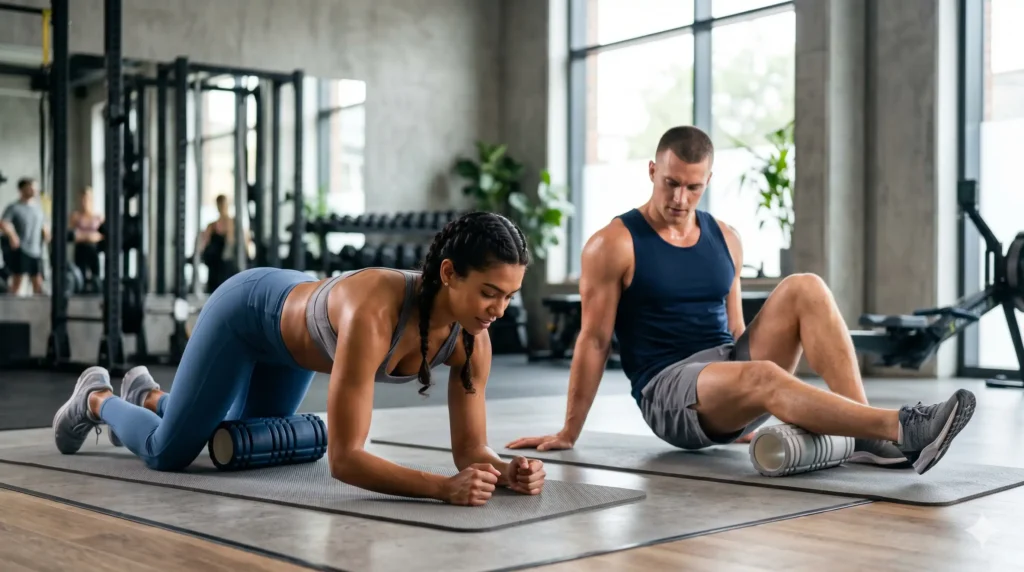
Muscle soreness, tight hips, stiff legs, and limited mobility can make workouts feel harder than they should. This is where foam rolling comes in.
Whether you’re a runner, gym-goer, athlete, or someone who spends hours sitting at a desk, foam rolling can help improve movement quality, reduce muscle tightness, and support recovery.
But what exactly are the benefits of foam rolling? Does it really work? And how do you use a foam roller correctly?
In this guide, you’ll learn the science-backed foam roller benefits, how to use a foam roller safely, common mistakes to avoid, and the best techniques for different muscle groups.
What Are the Benefits of Foam Rolling?
Foam rolling is a self-myofascial release technique that helps reduce muscle tightness, improve mobility, increase blood flow, support recovery, and temporarily relieve muscle soreness. It can be used before workouts to prepare muscles for movement and after exercise to improve recovery and flexibility.
Key foam roller benefits include:
- Reduced muscle soreness
- Better mobility and flexibility
- Improved range of motion
- Enhanced workout performance
- Increased blood circulation
- Faster recovery after exercise
- Improved posture
- Reduced muscle stiffness
- Better movement patterns
- Potential injury prevention support
- Relaxation and stress relief
What Is Foam Rolling?
Foam rolling is a form of self-massage that uses a cylindrical foam tool to apply pressure to muscles and connective tissues.
The technique is often called Self-Myofascial Release (SMR) because it targets the fascia—the connective tissue surrounding muscles.
Over time, exercise, poor posture, repetitive movement, and inactivity can contribute to muscle tightness and movement restrictions. Foam rolling helps relieve tension and improve tissue quality through controlled pressure and movement.
Think of it as a more accessible alternative to sports massage that you can perform at home, in the gym, or before training.
11 Foam Roller Benefits You Should Know
1. Helps Reduce Muscle Soreness After Exercise
Foam rolling may help reduce delayed onset muscle soreness (DOMS) by improving circulation and decreasing perceived muscle tightness after exercise.
After intense workouts, microscopic muscle damage can lead to soreness that peaks 24 to 72 hours later.
Research suggests that foam rolling may reduce soreness levels and improve recovery compared to doing nothing at all. Many athletes use foam rolling as part of their post-workout routine to feel less stiff and recover more comfortably.
2. Improves Mobility and Flexibility
One of the most recognized foam roller benefits is improved mobility and flexibility through reduced muscle tension and increased tissue movement.
Tight muscles can restrict movement patterns and reduce exercise efficiency.
Regular foam rolling may help:
- Improve squat depth
- Increase shoulder mobility
- Improve hip flexibility
- Enhance athletic movement quality
Studies show that combining foam rolling with stretching can improve range of motion more effectively than stretching alone.
3. Increases Range of Motion
A greater range of motion allows joints and muscles to move more freely.
This can improve:
- Exercise technique
- Athletic performance
- Functional movement
- Daily activities
Unlike prolonged static stretching, foam rolling can help improve movement without significantly reducing strength or power output before training.
4. Enhances Workout Performance
Foam rolling before exercise may help improve movement quality, muscle activation, and readiness for physical activity.
Many coaches use foam rolling during warm-ups because it can:
- Increase blood flow
- Improve movement efficiency
- Reduce stiffness
- Enhance muscle activation
When muscles move more freely, they can generate force more effectively during training sessions.
5. Boosts Blood Circulation
Applying controlled pressure to muscles may encourage circulation to targeted areas.
Better circulation helps deliver:
- Oxygen
- Nutrients
- Recovery-supporting compounds
Improved blood flow is one reason many people report feeling looser and more energized after foam rolling.
6. Supports Recovery Between Workouts
Recovery is where adaptation happens.
Foam rolling may help support recovery by:
- Reducing perceived soreness
- Improving movement quality
- Encouraging circulation
- Helping muscles feel less tight
While research suggests the recovery effects may be modest, many athletes consistently include foam rolling in their recovery routines.
7. May Help Improve Posture
Muscle tightness can contribute to poor posture patterns.
Common problem areas include:
- Chest muscles
- Hip flexors
- Upper back
- Quadriceps
By reducing tension in these areas, foam rolling may help improve posture awareness and movement mechanics.
8. Helps Relieve Muscle Tightness
One of the most immediate foam roller benefits is temporary relief from muscle tightness.
Many people notice reduced stiffness in:
- Calves
- Hamstrings
- Glutes
- Quads
- Upper back
This temporary reduction in tension can make movement feel smoother and more comfortable.
9. May Reduce Injury Risk When Combined With Proper Training
Important Note
Foam rolling alone does not prevent injuries.
However, improved mobility, movement quality, and tissue readiness may contribute to better exercise mechanics, which can support injury prevention efforts.
The best results come when foam rolling is combined with:
- Strength training
- Mobility work
- Proper recovery
- Good exercise technique
10. Helps You Move Better Throughout the Day
Foam rolling isn’t only for athletes.
People who sit for long periods often experience:
- Tight hips
- Stiff calves
- Lower back discomfort
- Reduced mobility
Regular foam rolling can help counteract some of these movement restrictions and improve everyday comfort.
11. Promotes Relaxation and Body Awareness
Many users compare foam rolling to a light sports massage.
The slow pressure and focused breathing often help people:
- Feel more relaxed
- Become aware of tight areas
- Improve recovery habits
Although research on stress reduction is limited, many individuals report feeling calmer after a foam rolling session.
Foam Rolling Before vs After a Workout
Which Is Better?
| Goal | Before Workout | After Workout |
|---|---|---|
| Increase mobility | ✅ Excellent | ✅ Good |
| Warm up muscles | ✅ Excellent | ❌ Not needed |
| Reduce soreness | ⚠️ Limited | ✅ Better |
| Improve movement quality | ✅ Excellent | ✅ Good |
| Recovery support | ⚠️ Limited | ✅ Excellent |
| Relaxation | ⚠️ Moderate | ✅ Better |
Bottom Line
Use foam rolling before exercise to improve mobility and movement quality. Use it after exercise to support recovery and reduce feelings of tightness.
How to Use a Foam Roller Correctly?
To use a foam roller, place the targeted muscle on the roller and slowly move back and forth over the area for 30–90 seconds. Apply moderate pressure, avoid joints and bones, and pause briefly on tight spots.
Follow these steps:
Step 1: Start Slowly
Use light pressure initially.
Beginners often make the mistake of applying too much pressure too soon.
Step 2: Roll Slowly
Move approximately 1 inch per second.
Fast rolling reduces effectiveness.
Step 3: Pause on Tender Areas
When you find a tight spot, stop for 20–30 seconds while breathing normally.
Step 4: Avoid Joints
Never roll directly over:
- Knees
- Elbows
- Ankles
- Neck joints
Instead, focus on muscle tissue.
Step 5: Stay Consistent
A few minutes several times per week is generally more effective than occasional long sessions.
Best Muscle Groups to Foam Roll
Quads
Benefits:
- Better squat mobility
- Reduced thigh tightness
- Improved recovery
How:
Lie face down and roll from the top of the thigh to just above the knee.
Calves
Benefits:
- Better ankle mobility
- Improved running mechanics
- Reduced lower leg tightness
How:
Sit on the floor with the roller under your calves and slowly roll upward.
Glutes
Benefits:
- Better hip mobility
- Reduced lower back compensation
- Improved movement quality
How:
Sit on the roller and shift weight toward the targeted glute.
Upper Back
Benefits:
- Better posture
- Improved thoracic mobility
- Reduced desk-related stiffness
How:
Lie on your back with the roller under the upper back and roll slowly.
Common Foam Rolling Mistakes
Rolling Too Fast
Slow, controlled movement works best.
Using Excessive Pressure
Pain does not equal progress.
Moderate pressure is often more effective.
Rolling Directly Over Joints
Focus on muscle tissue only.
Holding Your Breath
Deep breathing helps muscles relax more effectively.
Only Foam Rolling When You’re Sore
Consistency typically produces better results than occasional use.
Foam Roller vs Stretching
| Factor | Foam Rolling | Stretching |
| Reduces muscle tightness | ✅ Yes | ✅ Yes |
| Improves flexibility | ✅ Moderate | ✅ Strong |
| Improves mobility | ✅ Strong | ✅ Moderate |
| Recovery support | ✅ Strong | ⚠️ Moderate |
| Warm-up effectiveness | ✅ Strong | ⚠️ Depends |
| Relaxation | ✅ Good | ✅ Good |
Best Approach
Instead of choosing one or the other, combine foam rolling with stretching for optimal mobility and recovery results.
Who Should Use a Foam Roller?
Foam rolling may benefit:
- Runners
- Weightlifters
- CrossFit athletes
- Cyclists
- Desk workers
- Beginners starting a fitness program
- People experiencing muscle tightness
If you have an injury, chronic pain condition, or medical concern, consult a healthcare professional before starting foam rolling.
Frequently Asked Questions
Does foam rolling actually work?
Research suggests foam rolling can improve range of motion, reduce muscle soreness, and temporarily improve movement quality. Results vary by individual, but many athletes find it helpful for recovery and mobility.
How often should you foam roll?
Most people can benefit from foam rolling 3–7 times per week, depending on training volume and recovery needs.
Is it better to foam roll before or after a workout?
Both can be beneficial. Before workouts, foam rolling can improve mobility and warm-up effectiveness. After workouts, it can support recovery and reduce muscle tightness.
Can foam rolling help with back pain?
Foam rolling may help reduce muscular tightness in the upper and mid-back. However, people with back injuries or chronic pain should seek professional guidance before using a foam roller.
How long should you foam roll?
Most experts recommend spending 30–90 seconds on each muscle group, with total sessions lasting 5–15 minutes.
Is foam rolling painful?
Mild discomfort is normal, especially in tight muscles. Severe pain is not. Reduce pressure if foam rolling becomes excessively painful.
Final Thoughts
The biggest foam roller benefits include improved mobility, reduced muscle soreness, increased range of motion, enhanced workout performance, and better recovery.
While foam rolling isn’t a magic solution, it can be a valuable addition to a well-rounded fitness routine. When combined with strength training, mobility work, proper recovery, and consistent movement, it can help you move better, feel better, and perform better.
If you’re looking for a simple recovery tool that can fit into almost any training plan, a foam roller is one of the easiest places to start.