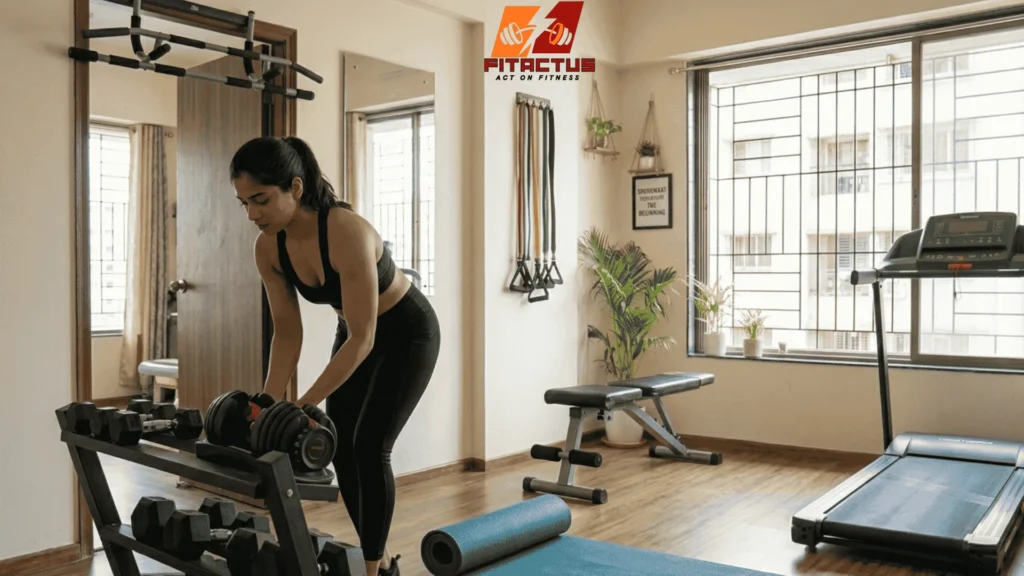
Free weight zones are the backbone of any serious fitness facility. Whether you’re building a commercial gym or upgrading an existing space, the free weight equipment gym area directly impacts user satisfaction, training efficiency, and injury prevention.
According to research published in the Journal of Strength and Conditioning Research, free weight training activates stabilizing muscles significantly more than machine-based workouts, leading to better functional strength development.
However, poor planning leads to overcrowding, safety hazards, and underutilized equipment. Therefore, this guide breaks down layout strategies, essential tools, equipment selection, and research-backed design principles to help you build a high-performing free weight area.
What is the best way to plan a free weight equipment gym?
The best way to plan a free weight equipment gym is to allocate 40–60% of gym space to free weights, ensure 1.5–2 meters of clearance between stations, use durable racks and flooring, and organize equipment by movement patterns (push, pull, legs). Prioritize safety, accessibility, and progressive training flow.
Why Are Free Weight Areas Important in a Gym?
Free weights improve functional strength, balance, coordination, and muscle activation more effectively than machines due to greater neuromuscular engagement.
Research Insight
A study in Sports Medicine (2014) found that multi-joint free weight exercises improve athletic performance and coordination more effectively than machine-based training.
Key Benefits
- Greater muscle activation
- Functional movement training
- Scalability for all fitness levels
- Higher member engagement
What Is the Ideal Layout for a Free Weight Equipment Gym?
The ideal layout separates lifting zones by function, maintains 1.5–2 meters between stations, places racks near walls, and ensures clear walking pathways
1. Zoning Strategy
Divide your space into:
| Zone | Purpose |
|---|---|
| Power Zone | Squats, deadlifts, Olympic lifts |
| Dumbbell Zone | Isolation and accessory work |
| Functional Zone | Lunges, kettlebells, mobility |
| Bench Press Zone | Chest-focused exercises |
2. Space Planning Guidelines
| Parameter | Recommended Value |
|---|---|
| Space per user | 45–75 sq ft |
| Walkway clearance | 1.2–1.5 meters |
| Rack spacing | 1.5–2 meters |
| Ceiling height | 3.5+ meters |
3. Traffic Flow Optimization
- Avoid cross-traffic between heavy lifts and walking paths
- Place mirrors strategically for form correction
- Keep plate storage near racks
What Equipment Is Needed for a Free Weight Equipment Gym?
A free weight gym requires barbells, dumbbells, weight plates, racks, benches, flooring, and storage systems
Core Equipment Comparison Table
| Equipment | Function | Ideal For | Cost Range (India) |
|---|---|---|---|
| Barbells | Compound lifts | All users | ₹8,000–₹25,000 |
| Dumbbells | Isolation & functional training | Beginners to advanced | ₹50–₹300/kg |
| Power Rack | Squats, presses | Advanced users | ₹40,000–₹1,50,000 |
| Adjustable Bench | Versatile exercises | All users | ₹10,000–₹40,000 |
| Weight Plates | Load progression | All users | ₹80–₹250/kg |
Supporting Tools
- Lifting platforms
- Chalk stations
- Plate storage trees
- Safety bars and spotter arms
What Is the Best Flooring for a Free Weight Equipment Gym?
Rubber flooring (15–20 mm thick) is best for free weight gyms due to shock absorption, durability, and noise reduction.
Research Insight
A study in Applied Ergonomics highlights that shock-absorbing flooring reduces impact stress and injury risk in weight training environments.
Flooring Comparison Table
| Type | Pros | Cons | Best Use |
|---|---|---|---|
| Rubber Tiles | Durable, shock absorbent | Expensive | Heavy lifting zones |
| EVA Foam | Affordable | Less durable | Light workouts |
| Vinyl | Easy to clean | Low shock absorption | General areas |
How Should Free Weight Equipment Be Arranged in a Gym?
Arrange equipment based on workout flow: start with racks, then benches, followed by dumbbells and accessories
Best Practice Layout Flow
- Entry → Warm-up space
- Power racks near walls
- Benches in central zone
- Dumbbells along mirrored walls
- Functional tools in open space
How Much Does It Cost to Set Up a Free Weight Equipment Gym?
Comparison Table: Budget Tiers
| Budget | Setup Quality | Ideal For |
|---|---|---|
| ₹2–5 Lakhs | Basic setup | Small gyms |
| ₹5–15 Lakhs | Mid-range | Growing gyms |
| ₹15+ Lakhs | Premium | Commercial gyms |
What Are the Most Common Free Weight Gym Planning Mistakes?
Common mistakes include overcrowding, poor spacing, lack of storage, and ignoring safety zones
Key Errors
- Insufficient spacing
- Cheap flooring
- Poor lighting
- Ignoring beginner-friendly zones
FAQs
Q1) What is the minimum space for a free weight gym?
A small free weight area requires at least 500–800 sq ft for basic functionality.
Q2) How many dumbbells should a gym have?
A standard gym should have pairs ranging from 2.5 kg to 50 kg, depending on user base.
Q3) Are free weights better than machines?
Research suggests free weights provide greater muscle activation and functional strength benefits, though machines are useful for beginners and rehabilitation.
Q4) How do I make my free weight area safer?
- Use proper flooring
- Maintain spacing
- Install safety racks
- Provide staff supervision
Final Thoughts
A well-planned free weight equipment gym is not just about buying equipment—it’s about creating a safe, scalable, and performance-driven environment.
When done right, it:
- Improves member retention
- Enhances training outcomes
- Builds long-term authority for your brand